
De 10:30h a 12:00h Plenaria 1
Miércoles
1 de julio
“Vision of IA and emerging technologies in Higher Education"
Idioma: Español
Organizador: Congreso TAEE 2026
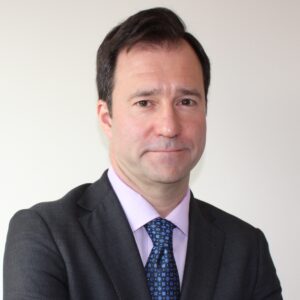 |
Manuel Abellán Serna
Manuel Abellán Serna is the Head of Higher Education at Microsoft Spain, where he supports universities, research centers, and business schools in their digital transformation processes through the use of cloud technologies, artificial intelligence, and cybersecurity. With a strong background in consultative sales and key account management in the education and public sectors, he has built his career at leading companies in the technology sector for 30 years. He holds an Executive MBA from IESE Business School and a degree in Telecommunications Engineering from the Polytechnic University of Valencia, and has extensive experience collaborating with executive teams and academic leaders to drive innovation and improve institutional outcomes. |
Resumen:
Teaching, research and operations of universities are deeply impacted by AI and other emerging technology areas such as cloud, cybersecurity, quantum or digital sovereignty. Universities must not only take advantage of those to be more efficient but also improve the student and teacher’s experience, improve research and adapt their academic programs to new emerging labour market needs.
De 17:30h a 18:30h Conferencia Abierta
Miércoles
1 de julio
“Innovación y Transformación en la Educación en Ingeniería: IA, Impacto Social e Industria 5.0"
Idiomas: Español, Inglés y Portugués
Organizador: Spanish and Portuguese Chapters of Education of IEEE and TAEE
Ponentes:
 |
Anikó Costa
Anikó Costa is an Assistant Professor in the Department of Electrical and Computer Engineering at NOVA University Lisbon, and a Senior Researcher at CTS-UNINOVA. She has a PhD in Electrical and Computer Engineering with specialization in Digital Systems. Her research focuses on Petri Nets, Embedded Systems, Hardware/Software Co-Design, and reconfigurable platforms for cyber-physical systems. She has developed innovative model-driven approaches for distributed controllers and has been cited by over 848 researchers worldwide. Professor Costa is an active member of the IEEE. She is the Chair of the Education Chapter of the Portugal Section and former Chair of the Women in Engineering Portugal. She also vice-president of the WoSTEM (Women in STEM) initiatives. |
 |
Sergio Martin
Catedrático de Ingeniería Telemática de la UNED, donde es Vicerrector Adjunto de Tecnologías Educativas, coordinando el proyecto de IA generativa para enseñanza y aprendizaje en la UNED. Presidente electo de del capítulo español de la Sociedad de Educación del IEEE.
|
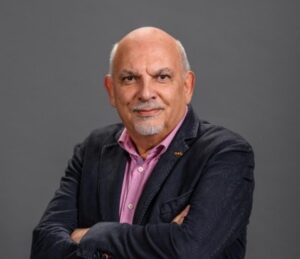 |
José Barata
José Barata is a Full Professor in the Department of Electrical and Computer Engineering at NOVA School of Science and Technology (NOVA-FCT), NOVA University Lisbon, and a senior researcher at UNINOVA's Centre of Technology and Systems (CTS). He leads the Robotics and Industrial Complex Systems (RICS) research group, conducting research in smart manufacturing, Industry 4.0/5.0, robotics, autonomous systems, and complex adaptive systems. He has coordinated and participated in numerous European and national research projects in areas such as intelligent manufacturing, cybersecurity, service robotics, and digital innovation. He currently serves as Scientific Coordinator of the Smart Farm Collaborative Laboratory (SFCOLAB). Prof. Barata's research focuses on smart manufacturing, cyber-physical systems, multi-agent systems, and autonomous robotics. He has collaborated with leading industrial partners including Siemens, Festo, Philips, and Electrolux, contributing to the development of foundational Industry 4.0 concepts and industrial demonstrators. He has authored more than 200 scientific publications, received over 5,000 citations, and serves on several IEEE and IFAC technical committees related to industrial agents, cybernetics, automation, and engineering education.
|
Moderan:
| Elio San Cristóbal Ruiz y Anikó Costa Presidentes de los capítulos español y portugués de la Sociedad de Educación del IEEE. |
|
Ponencias:
Título: Applied Learning for Social Impact: Adapting Toys for Vulnerable Children.
Adapting Toys for Vulnerable Children presents a four-week project-based learning experience within a third-year Electrical and Computer Engineering program, where students apply engineering knowledge to improve accessibility for children with special needs, particularly those with Cerebral Palsy. Working in small teams, students analyze and reverse-engineer commercial toys, identify barriers to interaction, and implement low-cost electronic and electromechanical adaptations that enable alternative methods of activation while preserving the original functionality and play experience. Through this hands-on challenge, students develop technical competencies in embedded systems, circuit analysis, and hardware modification, while also cultivating empathy, teamwork, and awareness of the social impact of engineering solutions. The project demonstrates how applied learning can address real-world inclusion challenges, showing that simple and affordable adaptations can significantly enhance play opportunities and quality of life for vulnerable children.
Título: Nuevos roles del profesorado en tiempos de la IA generativa
Resumen: La inteligencia artificial generativa está transformando la educación y redefiniendo el papel del profesorado, que pasa de transmitir contenidos y evaluar respuestas a diseñar experiencias de aprendizaje, formular problemas relevantes, verificar procesos y fomentar el pensamiento crítico. Esta ponencia mostrará las nuevas posibilidades para personalizar el aprendizaje, automatizar tareas y crear materiales educativos, al tiempo que advierte sobre los retos éticos, los sesgos y la necesidad de desarrollar nuevas competencias para integrar la IA de forma responsable.
Título: Teaching Agent-Based Manufacturing Under Industry 5.0
Industry 5.0 delineates a socio-technical transformation in manufacturing, conceptualizing a human-centric paradigm that harmonizes advanced cyber-physical architectures with human cognition, systemic resilience, and environmental sustainability. Central to this operational framework is Agent-Based Manufacturing (ABM), a decentralized control architecture wherein autonomous, heterogeneous, and intelligent software agents engage in cooperative decision-making across distributed production networks. As ABM emerges as a critical determinant of next-generation industrial agility, contemporary pedagogical methodologies must be re-engineered to equip learners with the competencies required to architect, optimize, and interface with these multi-agent systems. Educating the industrial workforce in ABM under the strictures of Industry 5.0 necessitates the synthesis of multi-agent system (MAS) theory, distributed artificial intelligence (DAI), cyber-physical production systems (CPPS), and symbiotic human-machine interaction (HMI). Consequently, the formulation of robust, interdisciplinary educational frameworks is imperative to cultivate a highly adaptive, technically proficient workforce capable of sustaining intelligent, self-organizing, and sustainable manufacturing ecosystems.
De 11:00h a 12:30h Plenaria 2
Jueves
2 de julio
Título:
“¿Y si Sherezade hubiera sido ingeniera? Cómo divulgar tu investigación de forma amena y precisa"
Ponente:
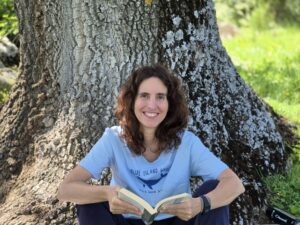 |
Laura G. De Rivera
Laura G. De Rivera, periodista independiente y autora del ensayo periodístico Esclavos del algoritmo. Manual de resistencia en al era de la inteligencia artificial (Debate, 2025), escribe sobre ciencia y tecnología en publicaciones como Muy Interesante, Agencia SINC, TecReview o Público, y es editora de Ciencia en The Conversation España. Ha recibido el Premio de Periodismo de la Fundación Española de Psiquiatría y Salud Mental 2025, Premio Transfiere a la Mejor Pieza Informativa 2025, Premio Prismas Casa de las Ciencias al Mejor artículo periodístico 2020, el Premio Boehringer Ingelheim de Periodismo Medioambiental 2022, el Premio de Comunicación científica IO-CSIC 2022, el Premio de Periodismo Accenture 2020, el Best Article of the Year de CASE Plantinum Awards Latinoamérica 2020 y el Premio ESET de Periodismo sobre Seguridad Informática 2019. |
RESUMEN:
Divulgar es solo la punta de iceberg de un proceso profundo que empieza antes: ¿quién soy? ¿qué quiero contar? ¿quién será mi público? ¿para qué hago esto? Estas y otras preguntas construyen los pilares necesarios para impulsar una divulgación que llegue a la gente, que resulte interesante (sobre el tema más arduo y más técnico que sea, si queréis) y que logre un impacto social. En esta sesión haremos un taller práctico, así que venid preparados con ideas de vuestra investigación o vuestra especialidad que os gustaría contar y venid con un cuaderno y un boli, por favor.
De 16:00h a 17:00h Mesa Redonda
Jueves
2 de julio
“FORMAR INGENIEROS EN LA ERA DE LA IA: FUNDAMENTOS, COMPETENCIAS Y COLABORACIÓN"
Idioma: Español, Inglés y Portugués
Organizador: Congreso TAEE 2026
Ponentes:
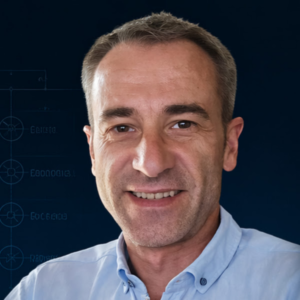 |
Pedro Plaza Merino (Plaza Robótica, España)
Es Doctor en Tecnologías Industriales por la Universidad Nacional de Educación a Distancia y fundador de Plaza Robótica, iniciativa orientada a la formación, divulgación y transferencia tecnológica en robótica, ingeniería, automatización, inteligencia artificial aplicada y tecnologías educativas. Su trayectoria combina experiencia en ingeniería de sistemas, docencia técnica universitaria y desarrollo de proyectos tecnológicos aplicados, con especial interés en la conexión entre fundamentos de ingeniería, competencias profesionales y tecnologías emergentes. |
 |
Elio San Cristóbal Ruiz (Universidad Nacional de Educación a Distancia, España)
Es Profesor Titular de Universidad en la Universidad Nacional de Educación a Distancia, adscrito a la Escuela Técnica Superior de Ingenieros Industriales. Su actividad docente e investigadora se centra en tecnologías educativas aplicadas a la ingeniería, laboratorios remotos y virtuales, entornos digitales de aprendizaje, industria conectada e innovación docente en disciplinas técnicas.
|
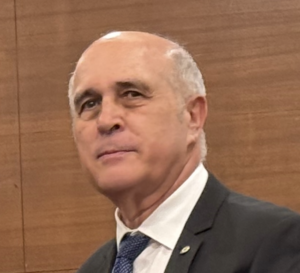 |
Martín Llamas Nistal (Universidade de Vigo, España)
Es doctor ingeniero de telecomunicación por la UPM y catedrático en la Escuela de Ingeniería de Telecomunicación de la Universidad de Vigo, España. Es autor o coautor de más de 300 artículos publicados en revistas internacionales revisadas por pares y en actas de congresos. Ha dirigido varios proyectos de investigación nacionales e internacionales en los campos de la telemática y el aprendizaje potenciado por la tecnología. Ha recibido varios premios del W3C y del IEEE. Desde abril de 2020 es director de atlanTTic, el Centro de Investigación en Tecnologías de las Telecomunicaciones de la Universidad de Vigo, España. Está muy implicado en las actividades de la Sociedad de Educación del IEEE, donde ha desempeñado diferentes cargos: miembro de la Junta de Gobierno (desde 2008) y del Comité de Planificación Estratégica (desde 2009), miembro del Comité de Publicaciones (desde del 2010) y presidente del mismo (2010-2018), vicepresidente de Publicaciones (2011-2018), vicepresidente de Miembros y Actividades Geográficas (2019-2020), presidente electo (2021-2022), y presidente (2023-2024) y miembro de la Junta de Actividades Técnicas del IEEE (2023-2024). Actualmente es el pasado presidente junior (2025-2026), presidente del comité de nominaciones (2025-2026) y vicepresidente desde el 2025 del grupo de trabajo de standard IEEE P3722 (Guía para el uso responsable de la inteligencia artificial (IA) en la educación superior).
|
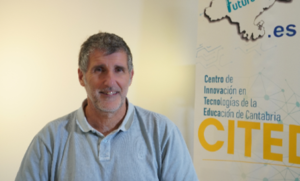 |
José Andrés Echevarría Zuazo (Consejería de Educación, F.P. y Universidades de Cantabria)
Consejería de Educación, F.P. y Universidades de CantabriaDirector del Centro de Innovación en Tecnologías de la Educación (CITED) de la Consejería de Educación, F.P. y Universidades de Cantabria. Profesor de secundaria de la especialidad de Tecnología. Vicepresidente de la Asociación de Profesores de Tecnología de Cantabria. Coordinador de los grupos de trabajo de los Curriculums de Tecnología de la ESO y Bachillerato de la LOMCE y de la LOMLOE. Creador de la materia de Sistemas de Control y Robótica. Coordinador del proyecto de Innovación Educativa “Cantabrots 3.0”. Creador del Concurso-Exhibición de Robótica Escolar “CantabRobots”. Tutor, formador y ponente en cursos de formación del profesorado
|
Modera:
| Pedro Plaza Merino (Plaza Robótica, España) | |
Título: FORMAR INGENIEROS EN LA ERA DE LA IA: FUNDAMENTOS, COMPETENCIAS Y COLABORACIÓN.
Resumen:
La inteligencia artificial y las tecnologías emergentes están transformando tanto la práctica profesional como la formación en ingeniería. Los futuros ingenieros y técnicos deberán desenvolverse en entornos donde convergen electrónica, automatización, sistemas embebidos, software, datos, comunicaciones, simulación, validación e inteligencia artificial. Este contexto plantea una cuestión central para la comunidad TAEE: cómo actualizar la enseñanza técnica sin debilitar los fundamentos que sostienen la ingeniería.
En esta mesa redonda se analizará, desde una perspectiva reflexiva y aplicada, cómo preparar mejor a los nuevos perfiles técnicos para trabajar en sistemas industriales complejos y tecnológicamente cambiantes. El debate abordará la brecha entre formación académica y necesidades profesionales, el uso responsable de la IA en laboratorios, simulación, generación de código, análisis de datos y evaluación, así como las competencias técnicas, transversales y éticas que deben reforzarse en la formación de ingeniería.
La sesión también prestará especial atención a los modelos de colaboración entre universidad, empresa, formación profesional e instituciones: prácticas, formación dual, TFG/TFM vinculados a retos reales, laboratorios compartidos, microcredenciales, recursos abiertos y transferencia tecnológica. El objetivo no es plantear la IA como una solución genérica, sino debatir cómo puede integrarse con criterio en la enseñanza de la electrónica, la automatización, los sistemas industriales y las tecnologías aplicadas.
La mesa buscará generar una síntesis útil para docentes, responsables académicos, profesionales e instituciones, orientada a identificar propuestas transferibles a asignaturas, laboratorios, proyectos y actividades de colaboración. Como cierre, se propondrán ideas fuerza que puedan servir como base para un futuro decálogo TAEE sobre formación en ingeniería en la era de la IA
De 12:00h a 13:00h Taller
Viernes
3 de julio
“Estándar IEEE sobre IA"
Ponente:
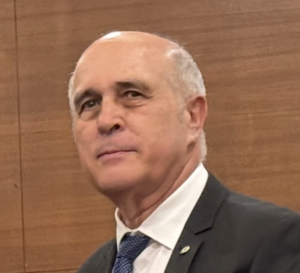 |
Martín Llamas Nistal
(ORCID 0000-0001-8751-6963) es doctor ingeniero de telecomunicación por la UPM y catedrático en la Escuela de Ingeniería de Telecomunicación de la Universidad de Vigo, España. Es autor o coautor de más de 300 artículos publicados en revistas internacionales revisadas por pares y en actas de congresos. Ha dirigido varios proyectos de investigación nacionales e internacionales en los campos de la telemática y el aprendizaje potenciado por la tecnología. Ha recibido varios premios del W3C y del IEEE. Desde abril de 2020 es director de atlanTTic, el Centro de Investigación en Tecnologías de las Telecomunicaciones de la Universidad de Vigo, España. Está muy implicado en las actividades de la Sociedad de Educación del IEEE, donde ha desempeñado diferentes cargos: miembro de la Junta de Gobierno (desde 2008) y del Comité de Planificación Estratégica (desde 2009), miembro del Comité de Publicaciones (desde del 2010) y presidente del mismo (2010-2018), vicepresidente de Publicaciones (2011-2018), vicepresidente de Miembros y Actividades Geográficas (2019-2020), presidente electo (2021-2022), y presidente (2023-2024) y miembro de la Junta de Actividades Técnicas del IEEE (2023-2024). Actualmente es el pasado presidente junior (2025-2026), presidente del comité de nominaciones (2025-2026) y vicepresidente desde el 2025 del grupo de trabajo de standard IEEE P3722 (Guía para el uso responsable de la inteligencia artificial (IA) en la educación superior). |
Resumen Taller:
El objetivo de este taller es presentar la próxima norma IEEE P3722:
«Guía para el uso responsable de la inteligencia artificial (IA) en
la educación superior».
Los objetivos de esta norma son:
- Aumentar la concienciación sobre el uso responsable de la IA en la enseñanza, el aprendizaje y el apoyo a los estudiantes,
- Proporcionar orientación práctica sobre la implementación de prácticas de IA transparentes y éticas,
- Fomentar el diálogo entre el mundo académico, la industria y los actores políticos.
A diferencia de normas técnicas como la IEEE P3428, que se centran en las arquitecturas de software, la norma IEEE P3722 está diseñada para docentes, administradores y responsables políticos.
La agenda de este taller es la siguiente:
1.- Breve presentación de la IEEE Education Society y la normas IEEE P3722
2.- Breve presentación de los subgrupos de trabajo.
3.- Sesión interactiva, discutiendo en pequeños grupos sobre:
- a) Uso de la IA en la enseñanza y aprendizaje en nuestro ámbito.
- b) Uso de la IA en la evaluación.
- c) Manera de mantenerse al día sobre las tecnologías de IA.
4.- Conclusiones y siguientes pasos: oportunidades para contribuir al desarrollo de la norma IEEE P3722